

Beyond the Big Leagues, Part 2: College Sports & the Athlete Influencer
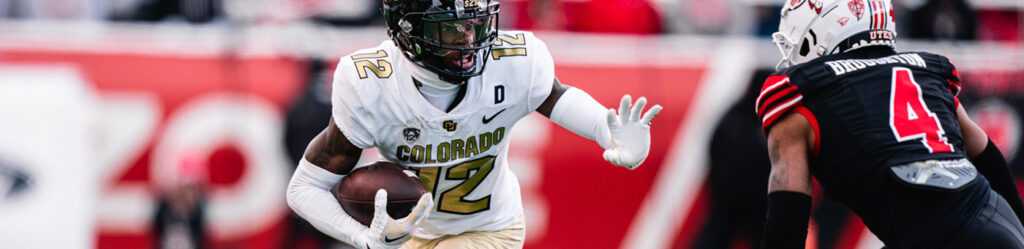
Two hours after catching the game-winning touchdown for the Colorado Buffaloes, Travis Hunter walks into his home, ready to collapse into bed. It’s only 7:00pm on this mid-October Saturday, but after playing 100+ snaps in a nailbiter against a Big 12 rival, the superstar Heisman candidate feels like he’s spent every last bit of energy. Just as he’s about ready to fall into his couch—already turning his thoughts to his anthropology midterm on Monday—Travis gets a text message from his agent reminding him of his contractual obligation to go live on Instagram for at least 20 minutes that evening1. Earlier that year, Hunter signed a sponsorship deal with Celsius, a rising energy drink brand whose ‘Live Fit’ slogan is perfectly represented by the college football prodigy2. Deciding to kill two birds with one stone, he grabs a can of their newest flavor from his refrigerator and sits down at the kitchen table with his anthropology textbook. Setting his phone up on a tripod, Travis begins to livestream the study session for his 1.6M Instagram followers (making sure to crack open the can of Celsius right in front of the camera).
Boasting the third-highest valuation among all college athletes ($3.4M, as of the time of writing), Travis Hunter is surely one of the most famous beneficiaries of recent changes to Name, Image, and Likeness (NIL) policies within the NCAA3. But those changes have presented life-changing opportunities to hundreds of thousands of student-athletes around the United States while shaking up the sponsorship world at the same time. The liberties granted to student athletes by NIL reforms have not just unlocked new paths to revenue generation for budding sports stars, but for businesses and brands as well. By understanding the evolving NIL space and the emerging role of the athlete-influencer, sponsors can strategically capitalize on the powerful parasocial relationships student athletes build with their fans.
The NIL Market: How it Started and Where It’s Going
Historically, student athletes have been considered “amateurs” at their sports. No matter the amount of time, blood, sweat, and tears they dedicated to the game, nor how elite their abilities, these young competitors were not allowed to receive any compensation beyond full-ride scholarships. Despite these constraints, college athletes have treated their positions as full-time jobs for decades, often spending 30-40 hours each week on training, practice, team meetings, and all the other demands of their programs. While those years of commitment and sacrifices eventually paid off big time for the select few who made it to the pros, most were lucky just to get their tuition covered by athletic scholarships.
Of course, where there are rules, there are rule-breakers. Over the years, countless scandals broke involving college athletes receiving under-the-table payments or pricey “gifts” as part of the recruitment process. There was seemingly always a new controversy in the NCAA, whether it was Cam Newton briefly losing eligibility during his dominant season with Auburn over allegations of illegal payments or Reggie Bush being forced to return his Heisman Trophy years after winning it4. The system worked like this for decades, with money dancing around regulatory barriers in the shadows of college campuses across the country.
In 2021, the landmark Supreme Court decision in NCAA v. Alston changed everything—well, sort of. We’ll spare you the long and boring details of the legal play-by-play, but know this: NCAA v. Alston opened the floodgates for student athletes to profit off their own name, image, and likeness. And with it, college sports suddenly became a whole different kind of playing field. Rising stars of basketball, football, and other popular collegiate sports were suddenly worth millions of dollars—not just to the universities they played for, but to all the brands that were now able to sponsor them. Right away, we saw a frenzy of sponsorships flying toward star players. On top of that, the college sports world rapidly began to throw together new organizational structures to take advantage of this new marketplace.
NIL Collectives
Once students were free to do business with unaffiliated third parties, we saw the creation of a new type of organization: NIL collectives. Typically led by alumni of a given university, you can think of collectives as a type of booster club. They operate independently of the universities whose athletes they serve, with the goal of collecting funds for players who they think can help their school win. Sometimes these collectives even act as agents for the athletes, facilitating deals with sponsors and helping the players leverage their talents to earn as much as possible. In just a few short years, the collective model has had a huge influence on the college sports world, with more than 300 currently operating across colleges and universities around the country5.
This year, the NIL is projected to grow by over 40% to an overall spend of $1.67 billion, with no signs of slowing down6. Collectives account for over 81% of all NIL compensation, helping top college athletes earn around 35% of the average annual salaries of professional players in their respective sports. Women’s college basketball in particular has bridged the gap between amateur and professional, with the top 25 college players earning $10K more on average than the median WNBA salary7. Much of this success is driven by the ability of collectives to work directly with businesses and reach deals that establish ties between the sponsoring brands and the universities’ entire athletic programs. The sky’s the limit for those getting into this market early, since collectives offer so much room for creative business partnerships.
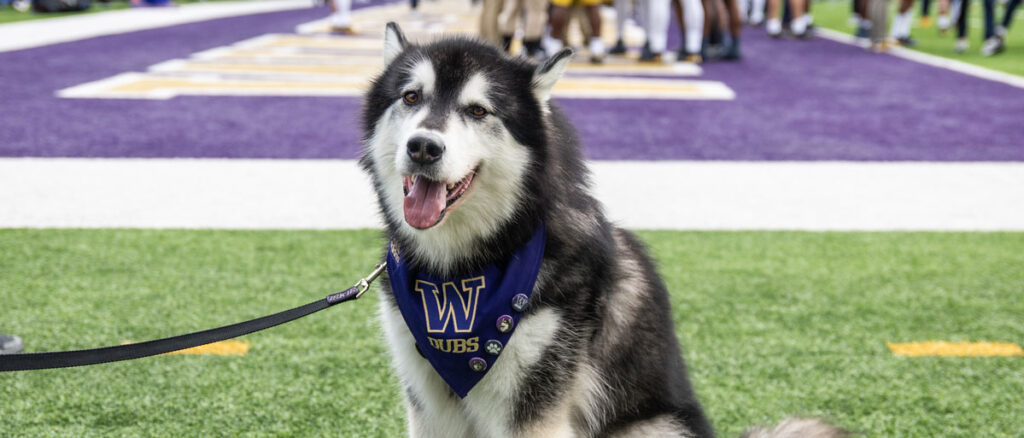
Notably, the beverage industry has been among the key players capitalizing on the NIL market so far, with breweries and distilleries concocting special recipes in collaboration with collectives around the country. Recently, the University of Washington’s NIL collective partnered with a local brewery to launch a beer in support of the school’s athletes. Huskies fans can find the “Montlake Gameday Golden Lager” at the concession stands of sports games, as well as local distributors8. For Seattle-based Redhook Ale Brewery, the deal means a massive boost to sales and brand recognition thanks to the massive popularity of Husky sports teams. On the other side of the nation, O.K.I. Spirits released an 8-year bourbon supporting University of Louisville athletes through the school’s NIL collective, 502Circle9.
Collectives are finding many innovative ways to create revenue for athletes, even going so far as launching their own media networks centered on their beloved collegiate stars10. Wherever and however collectives can build hype, the money (and thus, the best athletic talent) follows. But who are the biggest winners here? Star athletes who captivate fans on the field and influencer athletes who turn their social media clout into major brand deals.
Stars Off The Court: Influencer Athletes and the Creator Economy
Three athletes top the NIL charts: Shedeur Sanders, Livvy Dunne, and Travis Hunter (valued at $6.2M, $4.0M, and $3.4M, respectively)11. Where does their incredible value come from? Why have sponsors invested so much in these particular players? For Sanders and Hunter, their elite football talent is surely a big part of it—but it’s not a coincidence that the two Heisman candidates are on the same team as well. As the faces of the Colorado Buffaloes, their names and images are in the immediate proximity of one of the biggest American sports stars of all time: Deion Sanders. “Coach Prime” has cultivated a uniquely powerful brand image for the University of Colorado, capitalizing on his own personal star power from his Hall-of-Fame NFL career. It’s an ecosystem effect: Sanders and Hunter not only boost each other’s visibility and marketability but also benefit from the massive audience drawn by Deion Sanders, creating a synergistic cycle where each star amplifies the reach and value of the others—and that’s exactly what brands want. They’re looking for high-impact exposure, the kind that comes from a connected network of influential athletes whose combined fanbase drives engagement, brand loyalty, and ultimately, revenue.
What about LSU gymnast Livvy Dunne? As the only woman among the top 25 NIL earners, as well as the only athlete who doesn’t play basketball or football, she clearly offers something that most other student athletes don’t: 13.6 million followers across social media platforms. With over 8 million fans on TikTok and over 5 million on Instagram, Dunne has become a bona fide influencer. While her neighbors on the charts have impressive social media presences of their own, her totals more than double the combined followings of Shedeur Sanders and Travis Hunter. Livvy Dunne’s power for brands lies in her unique blend of athleticism and digital influence. As a gymnast, she brings an inspiring story of discipline, precision, and strength—qualities that resonate deeply with audiences, especially young women and sports fans. But it’s her status as a social media powerhouse that truly elevates her appeal. Her partnership with activewear brand Vuori is a perfect example: it’s powerful because it authentically aligns with her athletic image while also tapping into her massive, engaged following. Being a gymnast is a crucial, potent part of her narrative, but her ability to command the social media stage makes her a brand’s dream partner, merging athletic credibility with influencer-level visibility.
As college sports transition to a “semi-professional” model, the ability for athletes to harness social media and develop a strong personal brand will be more valuable than ever. Further, they will be able to carry that entrepreneurship into their professional careers. We can see examples of pro athletes having successful side hustles as influencers all across the sports world, such as the Kelce Brothers with their hit podcast “New Heights,” or Formula 1 driver Lando Norris streaming to millions of followers on Twitch.
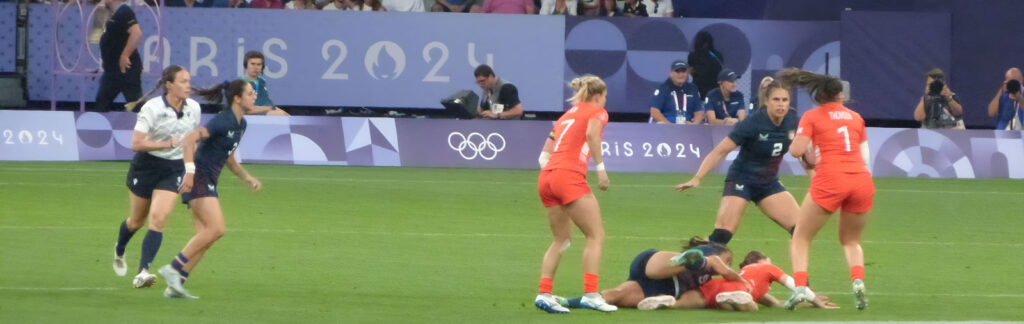
On occasion, athletes have even been able to use their prowess as influencers to raise the tides of their whole sport. Take Ilona Maher, the American women’s rugby player who’s used her platform on TikTok and Instagram to build a viral popularity. These efforts have led to Ted Talks, brand deals, a Sports Illustrated Swimsuit cover, and a spot on ballroom dance competition show, Dancing With The Stars12. Her ability to draw in fans from so many corners of the entertainment world has brought millions of new eyes to rugby and women’s sports in general, creating value beyond even her own personal brand. Though the star center for the USA Eagles may be retired by the time the Rugby World Cup comes to the United States (2031 for the men’s tourney and 2033 for the women’s), she will surely still be impacting the sport through her media presence13.
Thanks to the NIL market, athletes are able to get a jumpstart on their careers and start carving out roles as influencers earlier than ever. Brands should be eager to jump on the hype train, whether it’s through collectives or direct deals with individual rising stars. The newest generation of athletic superstars is bringing with them a natural finesse for social media, and are ready to use it for some of the biggest impacts to sports sponsorship we’ve ever seen. Their fans are young, energized, and loyal—impassioned about the causes and identities embodied by their sports idols online.
As the star power of athletes fuels an expanding global sports market, where can sponsors expect to find the strongest investments for their brands? Alongside women’s sports and collegiate sports continuing on their growth trajectories, new professional sports leagues and historically-niche sports are seeing exciting opportunities to broaden their own fanbases. Check in next week to read about how sports like pickleball are having a moment in America, and why so many alternative leagues are popping up in major sports like soccer and American football.
References
1 Footnote: This is a fictionalized portrayal of terms of an NIL sponsorship. The specific details of Hunter’s contract with Celsius have not been disclosed and are used here for illustrative purposes only.
2 $2.7 million NIL-valued Travis Hunter drops season 3 teaser for his collaboration with Celsius energy drink
https://www.sportskeeda.com/college-football/news-2-7-million-nil-valued-travis-hunter-drops-season-3-teaser-collaboration-celsius-energy-drink
3 On3 Travis Hunter NIL Valuation
https://www.on3.com/db/travis-hunter-144752/nil/
4 Top 5 ‘pay to play’ scandals rocking college football
https://theweek.com/articles/488252/5-pay-play-scandals-rocking-college-football
5 NIL Newsstand NIL Collectives Database
https://www.nilnewsstand.com/nil-collectives-database
6 NIL AT 3: The Annual Opendorse Report https://biz.opendorse.com/blog/nil-3-opendorse-report/
7 NIL AT 3: The Annual Opendorse Report https://biz.opendorse.com/blog/nil-3-opendorse-report/
8 Redhook Teams With Montlake Futures To Launch Montlake Gameday Gold Lager
https://gohuskies.com/news/2024/9/19/football-redhook-teams-with-montlake-futures-to-launch-montlake-gameday-gold-lager.aspx
9 Sales from new 8-year bourbon to benefit Louisville NIL collective
https://www.wdrb.com/news/sales-from-new-8-year-bourbon-to-benefit-louisville-nil-collective/article_354fbc60-2d81-11ef-b630-3bc7f192b8e1.html